Chapter 36: The Bricks
Reflections on Honoring Those Who Served
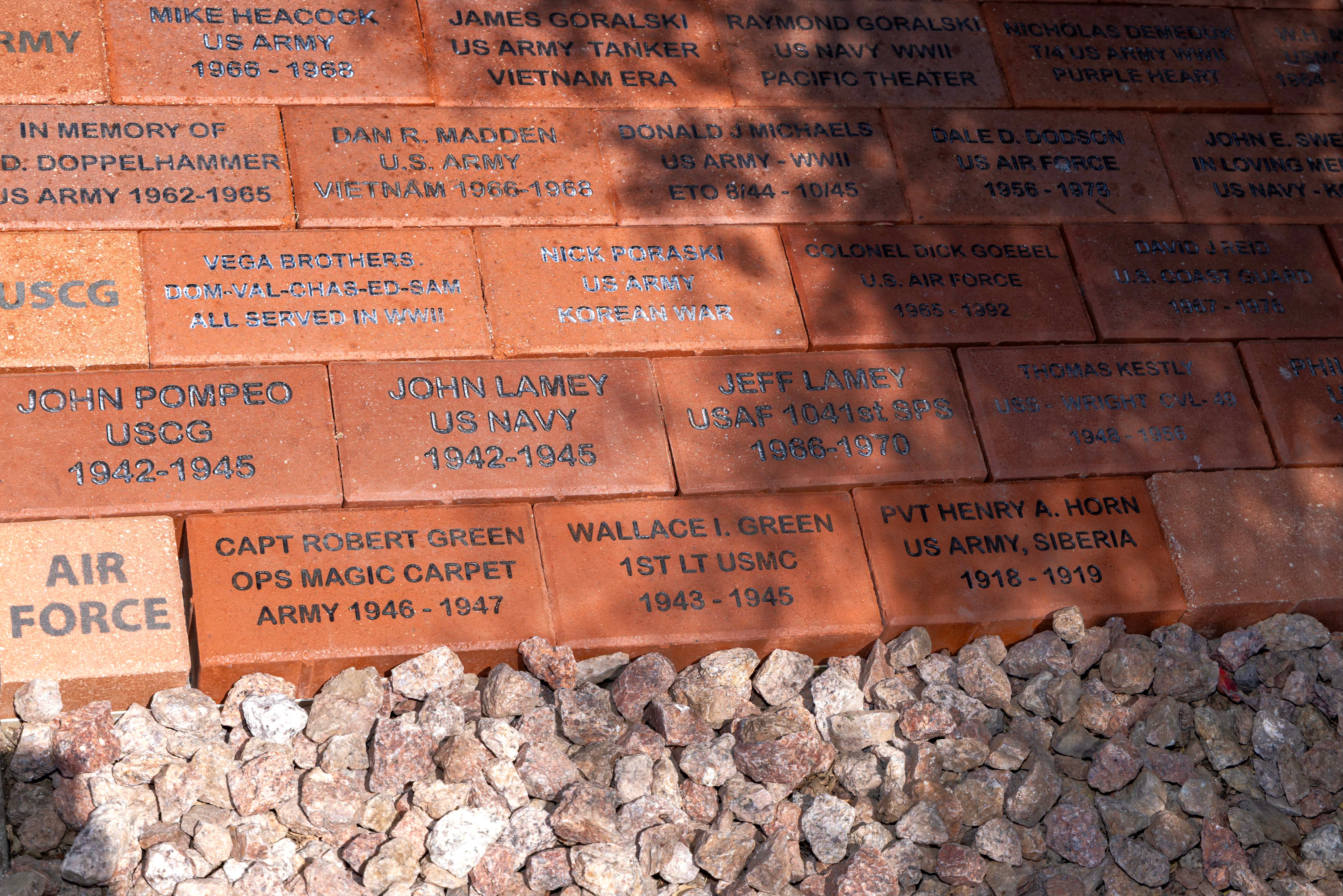
I have had a complicated relationship with the American military and war in general. My thoughts about military service have changed over my seven decades.
My formative teenage years were in the 60’s and 70’s. I grew up trying to reconcile the feelings of national purpose from my parent’s WWII generation with the divisive national feelings of my generation during the Vietnam War years.
I spent my professional life trying to heal people, yet many people I loved served in the military and some went to war.
As a boy, I played with plastic army men and watched television shows where Americans always won. The wounded disappeared quickly. The dead were rarely shown. War looked clean, brave, and distant.
The first time war truly entered my life was through the death of a young serviceman from our town who I had never met. I was in a school folk singing group at the time, and we were asked to miss classes to sing at his memorial service at St. Rose of Lima Catholic Church.
I remember feeling disoriented. I had never attended a funeral before. Until then, war had largely been television, toy soldiers, and stories. I was unprepared for a grieving mother, silence broken by muffled crying, uniforms, and a coffin at the front of a church. But I still had to perform with my group and quiet the emotions in my head.
A Different War
The return of Vietnam soldiers to everyday life was confusing to me. Over the kitchen table and in movies I grew up believing that soldiers returning from war were heroes. Many had experienced combat and loss of friends, yet they still went on to fight. Previously, in other wars, they were celebrated and thanked for their service. Yet Vietnam was a different war. It was widely unpopular, especially for the young. A returning soldier had to hide the fact that he had been there. Many college students regarded returning soldiers as if they were the enemy in an unjust war. The press and my parents’ friends frequently portrayed returning soldiers as unstable, dangerous, drug-addicted men rather than young people who had been sent to war. At that time the psychological wounds of war (now called PTSD) were rarely understood or openly discussed.
John
And then there was John.
John was a happy-go-lucky kid in high school, one of my brother’s best friends. They were five years older than me which, at that age, felt almost like a different generation. John and my brother taught swimming and lifesaving lessons together for the community. It was run seriously, but with the constant humor of two young men enjoying themselves. And I, like the others, had fun learning from them.
Then, while I was in high school, John was drafted into the Army and sent to Vietnam. At the time it all felt distant to me. Vietnam was something happening somewhere else, far beyond my daily life.
I did not really think deeply about it until he came home. John left as a joking boy and returned as a serious man. I remember him coming to our house to say hello. There was a melancholy about him that I had never seen before. He spoke briefly about Vietnam, although I do not remember what he said. What I do remember is that he was changed and I no longer really knew him.
One Thing They Agreed On
I was brought up with parents on very different sides politically. Over the dinner table my father would hold court and give us his right of center political views using his strong official voice. My mother would give him the space to talk for a while and then, the strong woman that she was, would push back her left of center views. I do remember one night after he had gone on and on with his thoughts, she loudly with exasperation said, “Bob I’m going to cancel out all of your votes!”
But when it came to their son serving in Vietnam, they were united. They did not want him to serve.
My brother, Jim, received his induction notice to come for a physical exam. There were family discussions of whether he should consider moving to Canada or Sweden where he could avoid the draft. In doing so he would never be able to return to the United States.
He was born with flat feet and had a bad back throughout his adolescence. This did not keep him from playing sports, but his back pain was severe enough for him to see an orthopedist. He got a letter from the orthopedist saying he could not march for miles. However my parents were still concerned that he still might pass the physical. Taking the physical was a risk.
My mother, ever the wise woman, felt that having him show up with a back brace would seal the deal for failure. But a new back brace would easily be noted. She bought a brace for him and it was included in each load of laundry so that it would look clean but used. The day arrived, he showed up and failed the physical!
By the time I was old enough to be inducted a lottery based upon birthdate was instituted. There was great anxiety before the lottery. A group of us at college sat in front of the TV, drinking beer and wondering if our student life would suddenly be changed. In my case there was a cause for celebration when my number of 137 was drawn. This was far too high to be called.
Veterans I Know
I have great respect and admiration for men and women who have served their country and put their lives on the line. I never served in an official capacity. A large part of my 6 years of post-medical school training took place at the V.A. Hospital in Portland, Oregon. My service was taking care of veterans outside of war.
I have close friends in Arizona, Big John and Marine Bob. They have told me about their experiences on the front lines of Vietnam. I am not sure I would have come out of their experiences as grounded as they are. I admire them for enduring their experiences in Vietnam and building their lives afterwards.
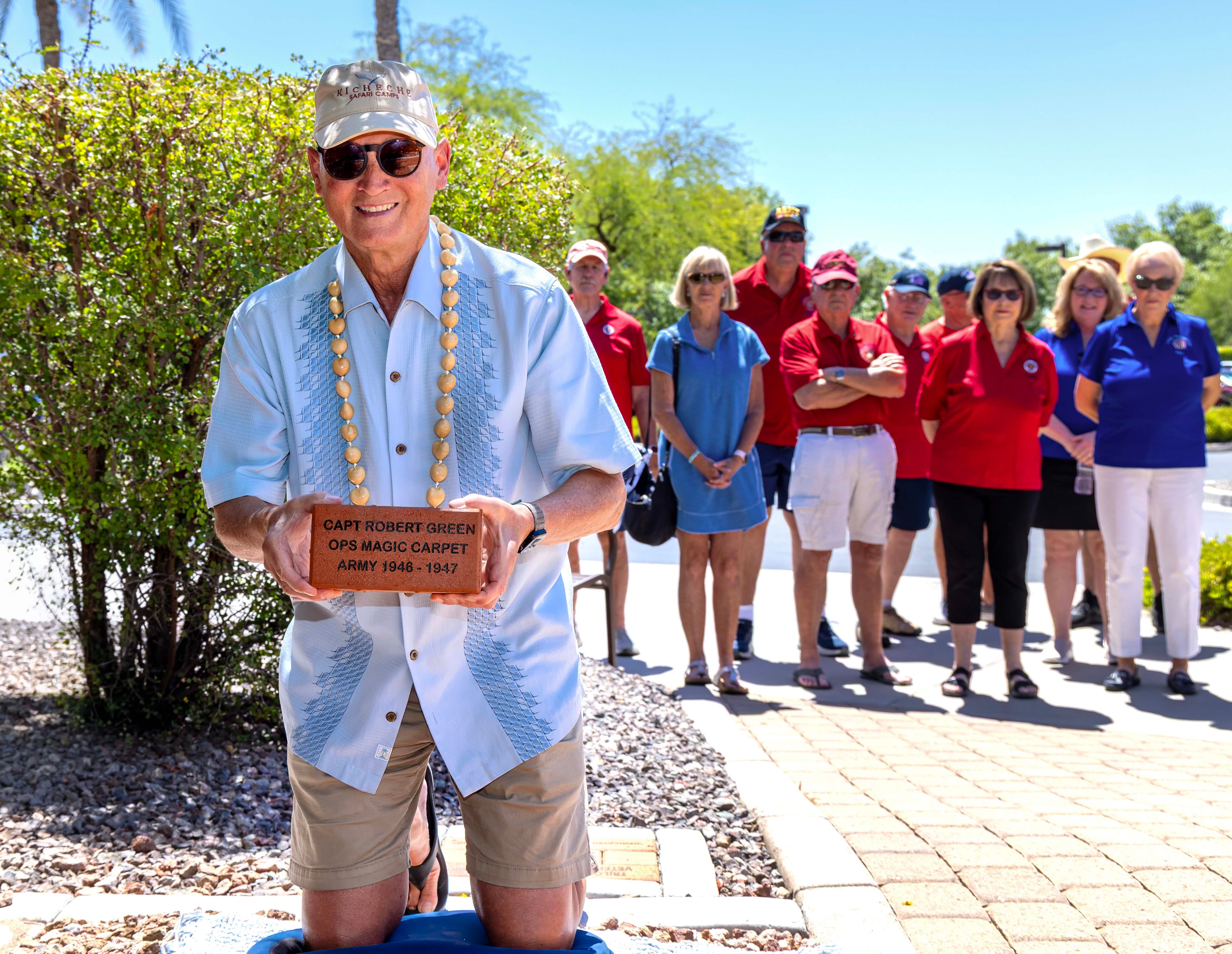
And all of this has led me back to the Memorial bricks. In our community in Arizona, we have a memorial area to place bricks for veterans. There is a short but meaningful service for the placement of the bricks. I have three ancestors who I knew quite well who served our country: my grandfather Hank (known by us as Hank the Crank) Horn, my Uncle Wally Green and my father, Bob.
Hank
Hank served in World War I as a private in the Army. He was a tough guy from upper Wisconsin of Norwegian extraction. He was used to the cold of winter. But he was not ready for the cold of Siberia. He was shipped out to Vladisvostok as part of the American Expeditionary Force to fight the Bolsheviks, to keep the train lines open for supplies and to help rescue 40,000 men of the Czechoslovak Legion. Grandpa Horn would tell us as kids about the bitter cold, eating rats at times because there were no supplies and his bitter disdain for Russians. But he told these stories always with a grandfatherly laugh.
Uncle Wally
Uncle Wally was First Lieutenant in the Marines during WWII. He never told stories about his time during the war. My only memory about his actual military service was seeing a photo of him in his uniform standing next to my very proud grandfather. In his discharge forms, when asked what he was going to do in civilian life his response was, “Look for a job.” He became an illustrator, but in his free time, for decades, he visited patients in VA hospitals in the greater New York area and was instrumental in putting together a Veterans radio program. His service lasted far beyond his time in the military.
Dad
My Dad, Bob, was a Captain in the Army. Immediately after his internship he was inducted into the Army as a ship’s doctor in Operation Magic Carpet. His mission was to help bring the troops home from Italy while transporting troops over to help maintain stability in postwar Europe.
His viewpoint of Magic Carpet was revealing. Initially he examined the troops going both ways over the Atlantic.
When examining the troops in New York going to Italy, many complained about how ill they were and that they should not be allowed to go. Once the ship set sail, everyone was healthy for the trip. Upon bringing the troops home from Italy, everyone told him they were in great health and were ready for the crossing. Within a day of setting sail, many were quite ill and just wanted to get back home into the States.
My Dad had a difficult first trip across the North Sea. He was a large man who loved to eat. He enjoyed the spirit of the Army’s motto: Take what you want to eat, but eat what you take. During the crossing they were hit by a powerful storm. He was seasick for days. Servicemen would come to his medical office complaining of seasickness and he could only reply that he was sicker than they were. When he came to the officers’ mess after not eating for 3 days, he was met with a standing ovation from the other officers. “The Doc” could now eat again.
The Bricks
I appreciate the service that these 3 men gave. At times we do not acknowledge the service of the women at home. They had the worry of thinking about the soldiers overseas and kept the home ready for their return, not knowing if they would return.
I feel the same way about all who have served this country, men and women and their support at home.
Laying the bricks in their honor in a place of remembrance became a powerful reminder of what others have done and continue to do.
Nice piece about the necessary service that preserves the US. I too was draft eligible for Viet Nam and had a lottery number of about the same as yours in 150000 person city ( Winston Salem NC). I was encouraged to join ROTC but as you said , not a popular thing to do so stayed out. My Dad served during WW2 in N Africa and Italy as a dentist and felt very proud to be fighting for US . He was in Reserve Corps for 20 years , served in VA then private practice. We had a lot of parallels !
I can picture all you guys at Phi Delt listening to the draft.